
A simple feedback framework to make conversations more specific, constructive and useful.
Why is it that some people can give us direct, uncomfortable feedback and we’ll listen – while the same message from someone else immediately puts us on the defensive?
Often, the difference isn’t the feedback itself. It’s the relationship, the intent behind it and how the message is delivered.
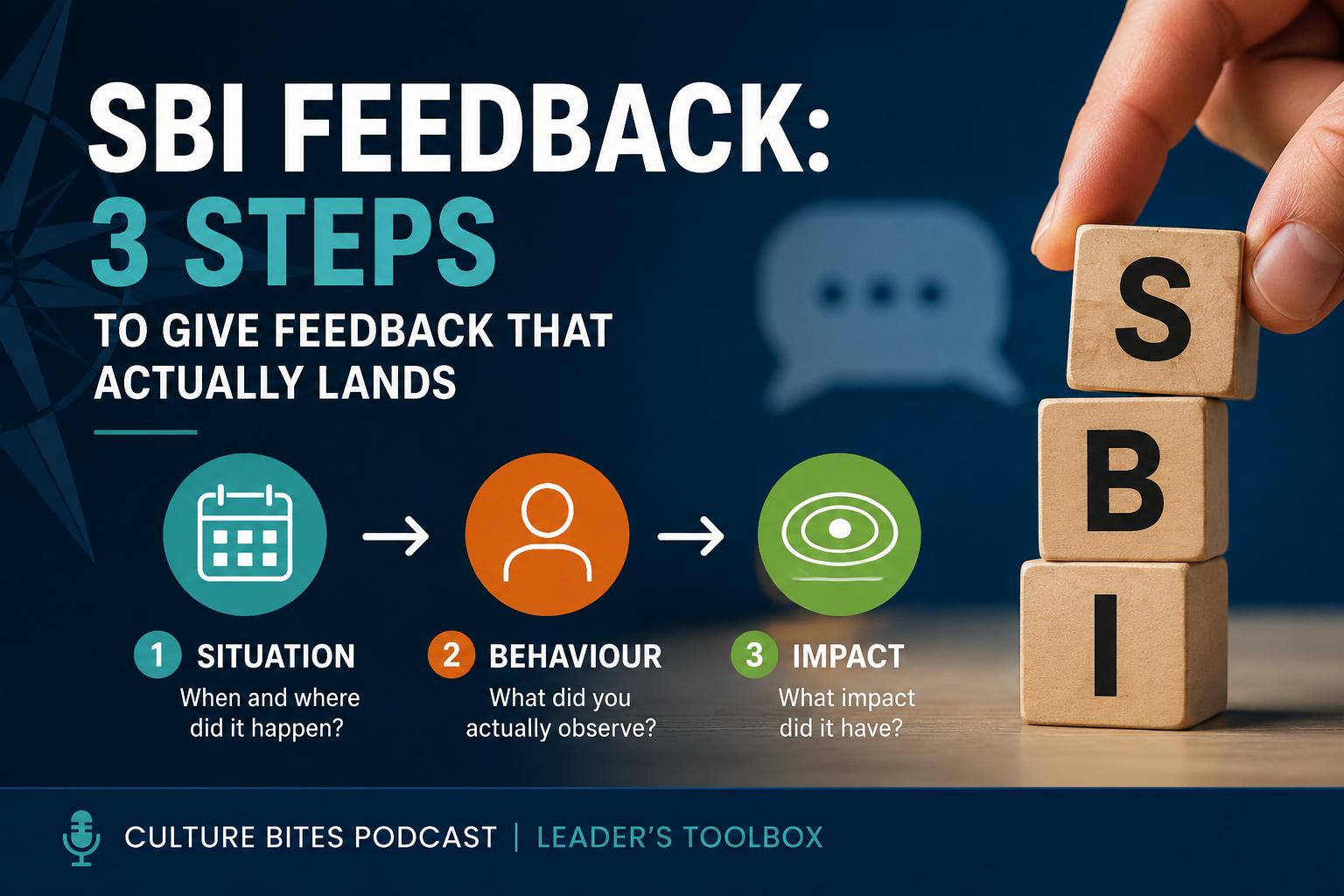
Giving good feedback is an essential leadership skill, but it doesn’t need to involve a complicated framework. SBI – Situation, Behaviour, Impact – gives leaders a simple way to make feedback more specific and actionable, while avoiding vague labels and judgements.
But the three letters are only part of the story. For feedback to actually land, leaders also need to think about what happens before and after the conversation.
Listen to this Episode on the Culture Bites Podcast
In this episode of Culture Bites, host Dominic Gourley continues the Leader’s Toolbox series by exploring SBI and the leadership behaviours that make feedback more likely to be heard, understood and acted on.
What Is the SBI Feedback Model?
SBI stands for Situation, Behaviour, Impact.
It helps leaders give feedback based on something they have actually observed, rather than relying on generalisations or labels.
Instead of saying:
“You were rude in that meeting.”
you can explain when the behaviour happened, what you observed and why it mattered:
“During yesterday’s team meeting, when Tom was explaining the timeline, you interrupted him twice before he had finished. It made it harder for him to contribute, and I noticed some of the other people in the meeting became quieter afterwards.”
“Rude” is a judgement. Interrupting someone twice is an observable behaviour. Focusing on what actually happened gives the other person something specific they can understand and act on.
Good Feedback Starts Before SBI
Even the best feedback framework won’t compensate for a lack of trust.
People are more likely to listen to difficult feedback when they believe the person giving it has their best interests at heart. At work, that trust is built through everyday behaviours such as listening, showing respect, asking for opinions and extending trust.
As Dominic explains, build the relationship you need before you need it.
Your intent also matters. Before giving feedback, ask yourself: Why am I having this conversation?
If you’re simply frustrated, that will probably come through. If you genuinely want to help someone improve, that will come through too. Dominic puts it simply: “Intent has a smell.”
Make your positive intent clear:
“I’m giving you this feedback because I want you to be successful.”
That context can change how the feedback is received.
The 3 Steps of SBI Feedback
The beauty of SBI is its simplicity. The feedback follows three steps:

Situation – When and Where Did It Happen?
Start by identifying the specific situation:
“During yesterday’s team meeting…”
or:
“On the client call this morning…”
This is more useful than saying “You always do this” or “You constantly interrupt people.” A specific situation gives you both something concrete to discuss.

Behaviour – What Did You Actually Observe?
Describe the behaviour without adding assumptions, interpretations or judgements.
Instead of saying “You were unprofessional,” describe what the person actually did. What would a camera or microphone have captured?
This separates the person from the behaviour. You’re not telling someone who they are; you’re helping them understand something they did.

Impact – Why Did It Matter?
Finally, explain the impact.
What happened because of the behaviour? The impact might have been on another person, the team, a customer, the quality of the work or the overall outcome.
This is the “so what?” of the feedback. It helps the person understand why the behaviour is worth changing – or repeating.
Put Feedback Into Action
Don’t wait for a small issue to become a bigger one. Dominic calls this “choose your hard” – having the conversation now might be uncomfortable, but waiting usually makes it harder.
Once you’ve shared the situation, behaviour and impact, get curious. Ask for their perspective and agree on what happens next. The goal is learning and action.
Use Feedback Both Ways
SBI isn’t just for addressing problems. Use it to reinforce what’s working by telling people what they did well and why it mattered.
And remember, giving feedback is only half the skill. Leaders also need to receive it well. Listen, ask questions and stay open to what you might learn.
You get more of what you notice.
Instead of “Great job on that client call,” explain what the person did well and why it mattered. This gives them something specific they can repeat.
You get more of what you notice.
Build Leadership Capability That Lasts
SBI is one practical tool for better leadership conversations.
Human Synergistics helps leaders understand their impact, build more effective behaviours and turn insight into action through the Life Styles Inventory™ (LSI), coaching and leadership development.

Frequently Asked Questions
What does SBI stand for in feedback?
SBI stands for Situation, Behaviour and Impact. It is a framework for giving specific feedback by explaining when something happened, the behaviour you observed and the impact it had.
What is an example of SBI feedback?
An example might be:
“During yesterday’s team meeting [Situation], you interrupted Tom twice while he was explaining the project timeline [Behaviour]. It made it harder for him to contribute, and I noticed some other team members became quieter afterwards [Impact].”
Can SBI be used for positive feedback?
Yes. SBI can reinforce positive behaviour by describing the situation, what the person did well and the positive impact it had.
When should a leader give feedback?
Feedback is generally most useful when it is given close enough to the event for the situation to remain clear and relevant. Avoid waiting until frustration builds or a small issue becomes a larger performance problem.
How do you give feedback without making someone defensive?
Build trust, make your positive intent clear, focus on specific observable behaviours, explain the impact and give the person an opportunity to share their perspective.
Subscribe to Culture Bites
Subscribe to Culture Bites wherever you get your podcasts for more practical tools and conversations about leadership, teams and organisational culture.
Share this episode with a leader or team looking to make feedback more specific, constructive and useful.
Have a leadership or culture question you’d like us to answer? Email podcast@human-synergistics.com.au.