
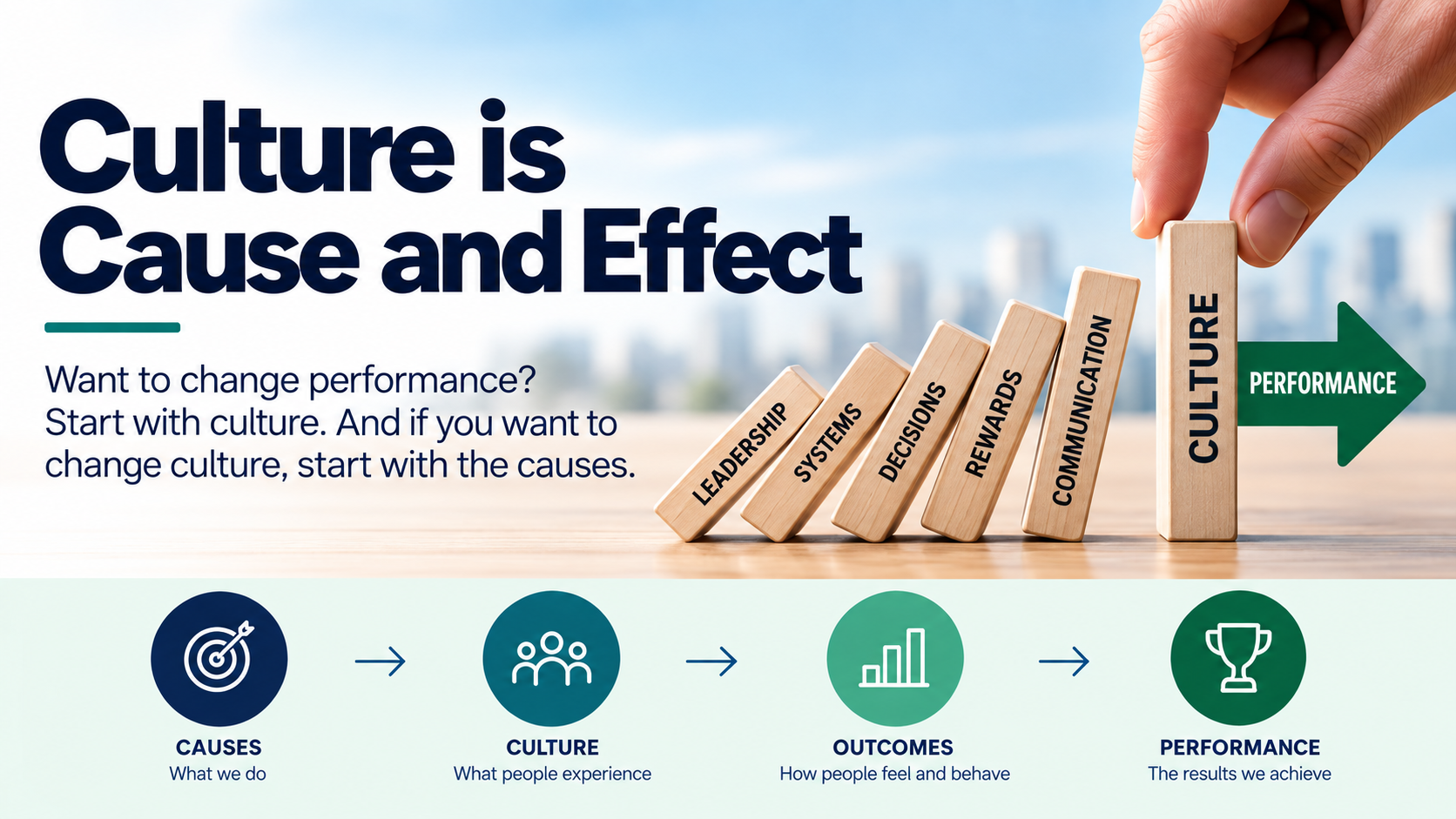
If you want to change performance, start with culture. And if you want to change culture, start with the causes.
Most organisations don’t deliberately design their culture. They bring together capable people, put systems and structures around them, and hope the right behaviours emerge.
But culture isn’t random.
The culture you have today is being shaped by how work actually gets done — how decisions are made, goals are set, people are rewarded, mistakes are handled and leaders behave.
That means if the culture you have isn’t the culture you want, something in the organisation is reinforcing the wrong message.
The opportunity is to identify those causes and change them.
Listen to this Episode on the Culture Bites Podcast
In this episode of Culture Bites, Dominic Gourley explores the idea that culture is cause and effect — and why lasting culture change requires organisations to look beyond values and engagement scores to the systems, structures and leadership practices shaping everyday behaviour.
How Culture Works
At Human Synergistics, the How Culture Works model helps make culture less abstract.
At one end is the culture an organisation says it wants — the behaviours and expectations that will help it deliver its strategy.
Then there is the culture people actually experience.
That culture influences outcomes such as motivation, satisfaction, teamwork, adaptability and effectiveness — which ultimately affect performance.
But the most important question is:
What is causing people to experience that culture in the first place?

If the culture you want and the culture you have are different, look upstream.
What are your systems, structures and leadership practices teaching people about how they need to behave to succeed?
Change the causes → change the culture → change the performance.
What Are People Really Learning?
Values tell people what an organisation aspires to.
But everyday experience tells them what is actually expected.
You might say you want ownership, while requiring manager approval for every meaningful decision.
You might say you want innovation, while ideas disappear without feedback and mistakes attract more attention than successful experimentation.
You might say you want high performance, while rewarding people primarily for beating negotiated targets rather than improving actual performance.
The message people learn from the system will usually be stronger than the message written on the wall.
From What We Say to What We Get
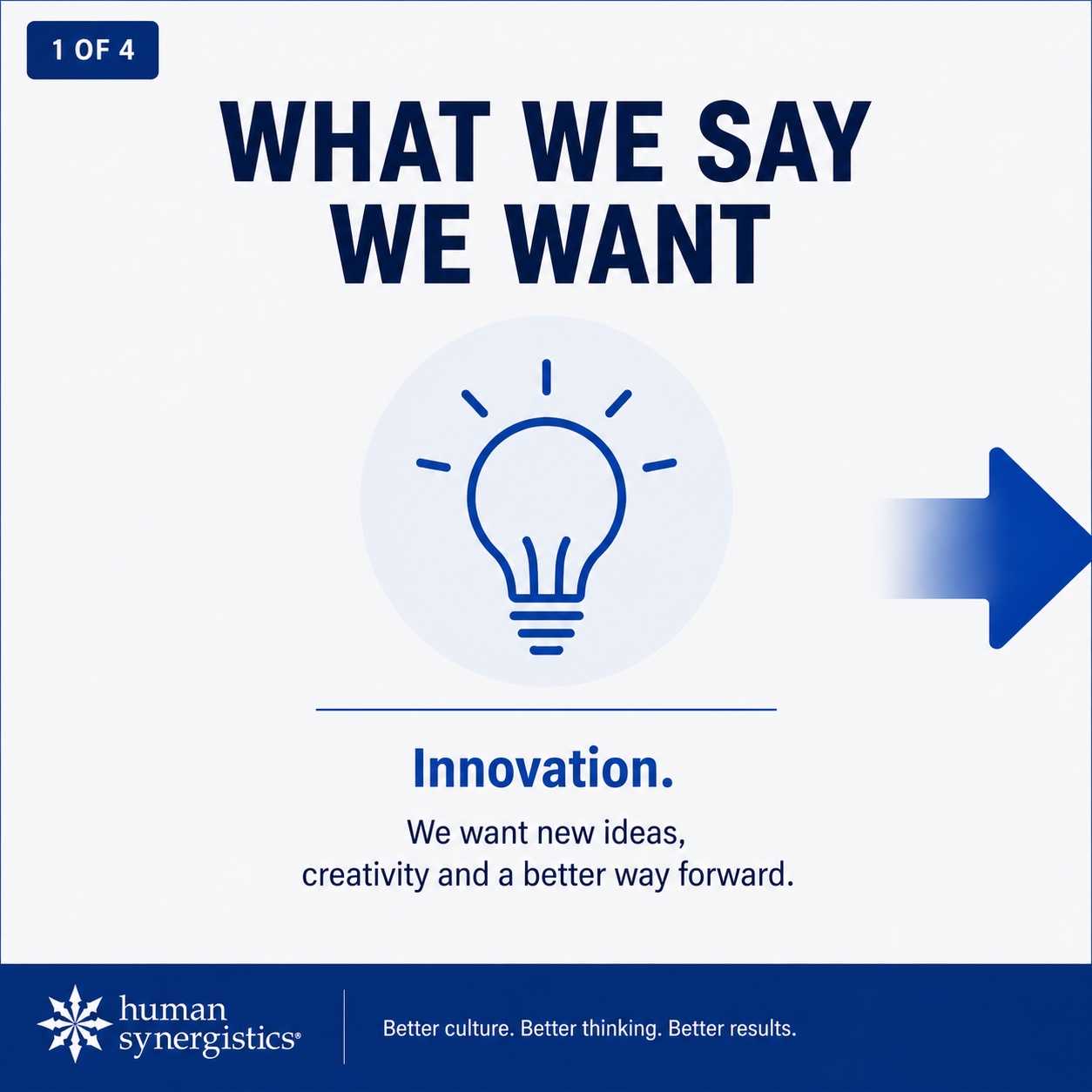
What We Say We Want
Innovation. We want new ideas, creativity and a better way forward.
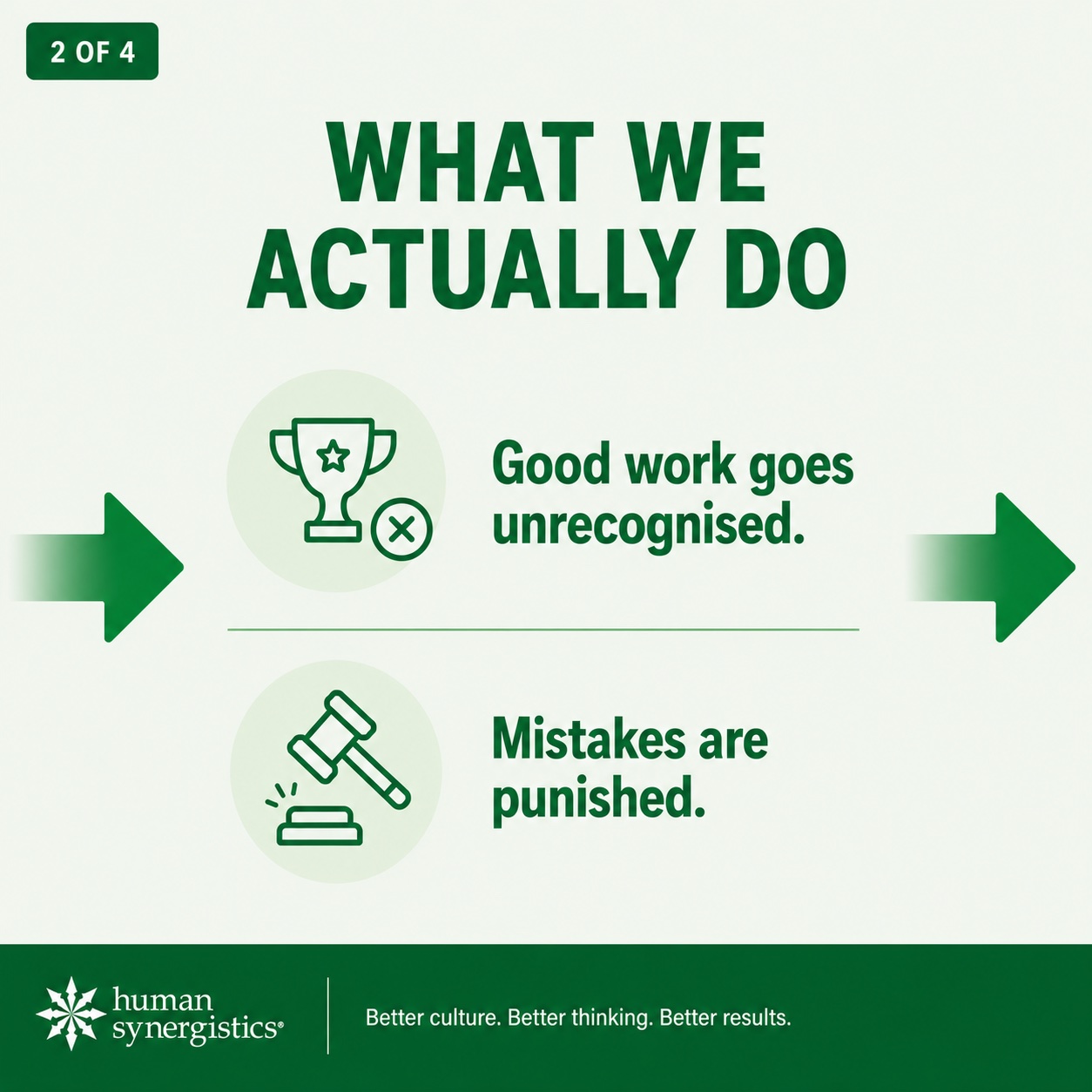
What We Actually Do
Good work goes unrecognised. Mistakes are punished.
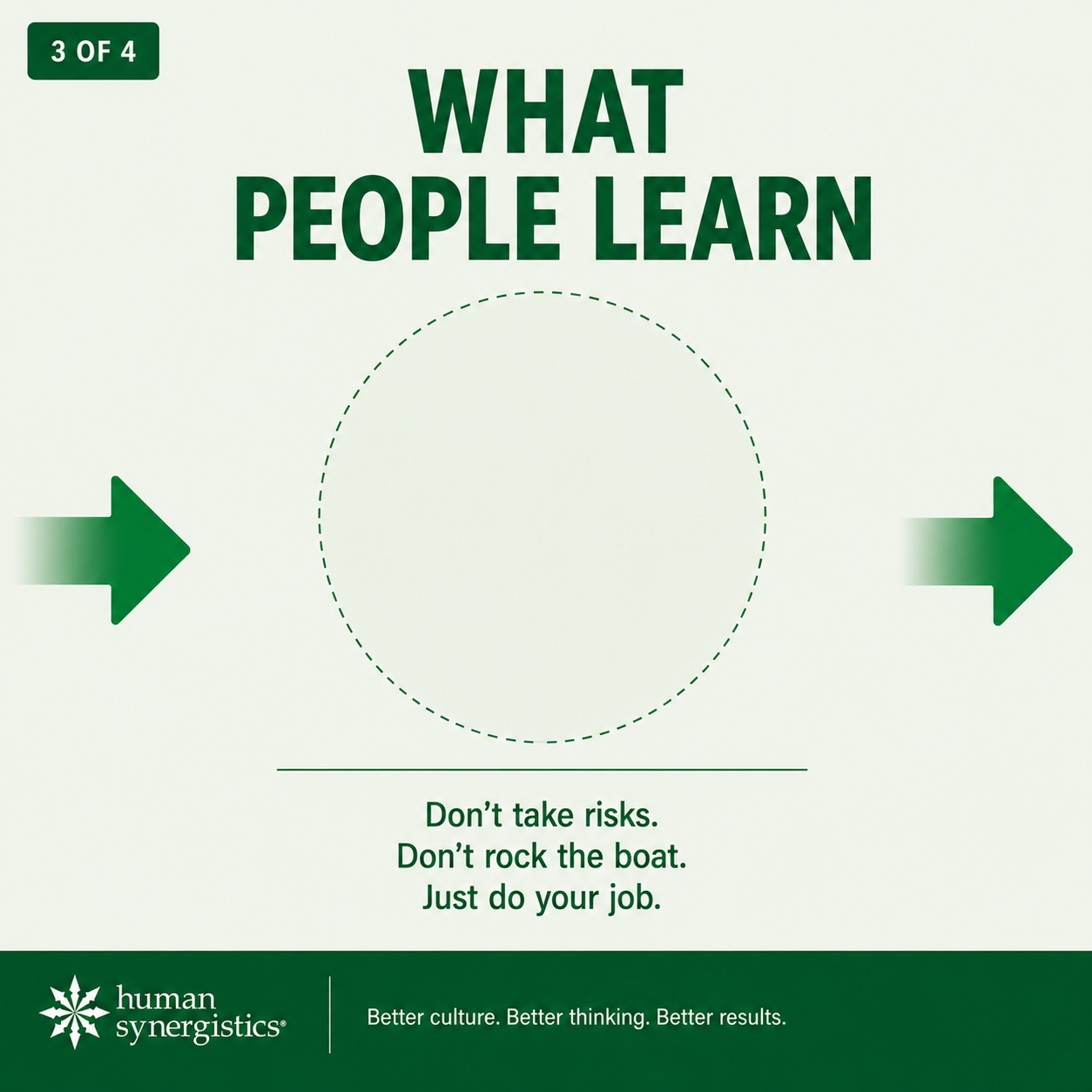
What People Learn
Don’t take risks. Don’t rock the boat. Just do your job.
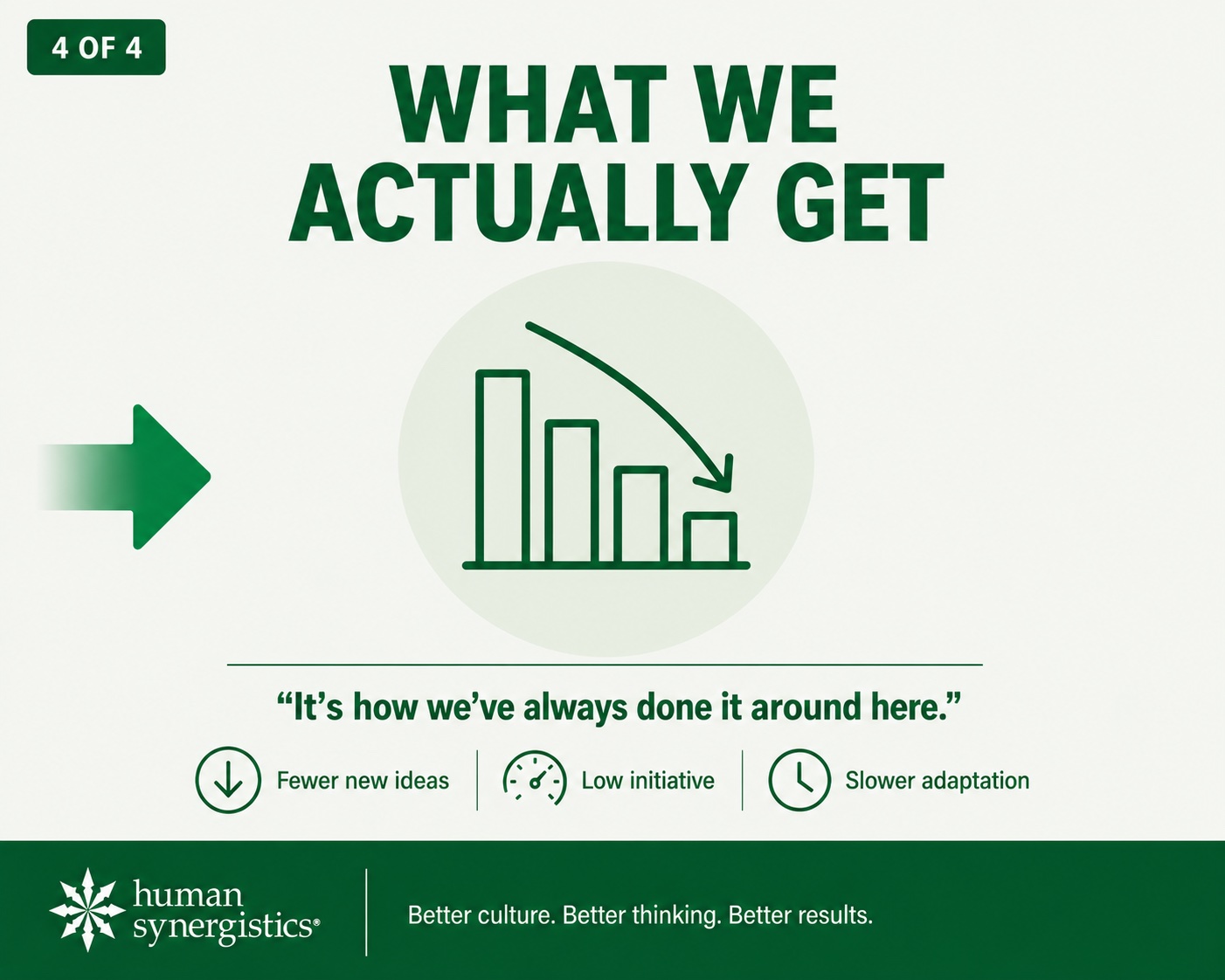
What We Actually Get
Fewer new ideas. Low initiative. Slower adaptation.
This is culture in action.
Nobody needs to explicitly tell people “don’t innovate.” If the system repeatedly teaches them that new ideas go nowhere and mistakes carry a cost, people will adapt their behaviour accordingly.
Change the Environment, Not Just the Message
Take ownership as another example. Leaders often say they want people to take more accountability and stop escalating decisions. But can people genuinely own the outcome?
If leaders prescribe the goal, the process and every important decision along the way, the employee doesn’t really own it. They’re executing someone else’s plan. If you want more ownership, look at the environment around the person.
Do they have:
- clear outcomes?
- appropriate decision rights?
- access to the information they need?
- autonomy over how they achieve the result?
- the capability and support to make good decisions?
Telling people to behave differently without changing the conditions around them rarely creates lasting change.
Don’t Confuse the Measure With the Outcome
Culture can also be shaped by the way organisations measure and reward performance. Dominic uses safety as an example.
A goal such as zero incidents may come from a genuine desire to keep people safe. But if an incident damages a team’s performance result or attracts blame, people can learn that the real priority is keeping the number at zero — not necessarily reporting and learning from incidents.
The same principle applies to sales targets, performance ratings, customer measures and other KPIs.
Ask:
What behaviour could this measure unintentionally encourage?
The goal isn’t to stop measuring performance. It’s to understand the cultural messages sitting underneath the measure.
Engagement Is an Outcome Too
Engagement surveys can tell you something important about how people feel. But if motivation or engagement is low, simply asking people to become more engaged doesn’t address the cause. Look at the environment.
Are people clear on what they’re trying to achieve? Do they have challenging but realistic goals? Do they have autonomy? Is good work recognised? Are people supported when they make mistakes? Are they involved in decisions that affect their work?
Those everyday experiences shape culture — and culture helps shape engagement. Think of the engagement result as a warning light on the dashboard. The light is useful, but fixing the light itself doesn’t solve the problem underneath.
A Practical Culture Check
Take one thing your organisation says is important — perhaps innovation, ownership, teamwork, customer focus or safety — and ask four questions:
- What do we say we want?
- What do we actually do?
- What are people likely to learn from that?
- What outcome are we actually creating?
The gap between those answers can reveal where culture change really needs to begin.
Take the Guesswork Out of Culture Change
Human Synergistics helps organisations understand not only what their culture looks like, but what is creating it.
Using tools including the Organizational Culture Inventory® (OCI®) and Organizational Effectiveness Inventory® (OEI), organisations can measure the culture people want, the culture they currently experience, the outcomes associated with it and the causal factors shaping that culture.
That creates a much more practical conversation:
Here’s the culture we want. Here’s the culture we have. Here’s what’s creating the gap. What do we need to change?
Frequently Asked Questions
What does "culture is cause and effect" mean?
It means organisational culture is shaped by everyday systems, structures and leadership practices. Those cultural expectations then influence how people behave and, ultimately, how the organisation performs.
What causes organisational culture?
Culture can be shaped by factors including leadership behaviour, decision-making, goal setting, reward systems, job design, communication, performance management and what happens when people succeed or make mistakes.
Why don't values alone change culture?
Values describe the culture an organisation wants, but people also respond to what they experience every day. If systems and leadership behaviours contradict the values, the everyday experience will usually have the stronger influence.
How can leaders start changing culture?
Start by identifying the gap between the culture you want and what people experience today. Then look at the systems, structures and leadership practices that may be reinforcing the current culture and change the causes that are sending the wrong messages.
Subscribe to Culture Bites
Subscribe to Culture Bites wherever you get your podcasts for more practical ideas about leadership, teams and organisational culture.
Share this episode with a leader or team ready to move beyond culture slogans and start changing the systems and behaviours that shape how work really gets done.
Have a leadership or culture question you’d like us to answer? Email podcast@human-synergistics.com.au.